
Textured Skin Is Not One Problem: Five Causes, Sorted by Touch
Textured skin is a description rather than a diagnosis: at least five different things produce it, and two do not respond to exfoliating.
Iris Vance writes as a researcher, not a dermatologist or licensed esthetician. Nothing here diagnoses or treats. How we work.
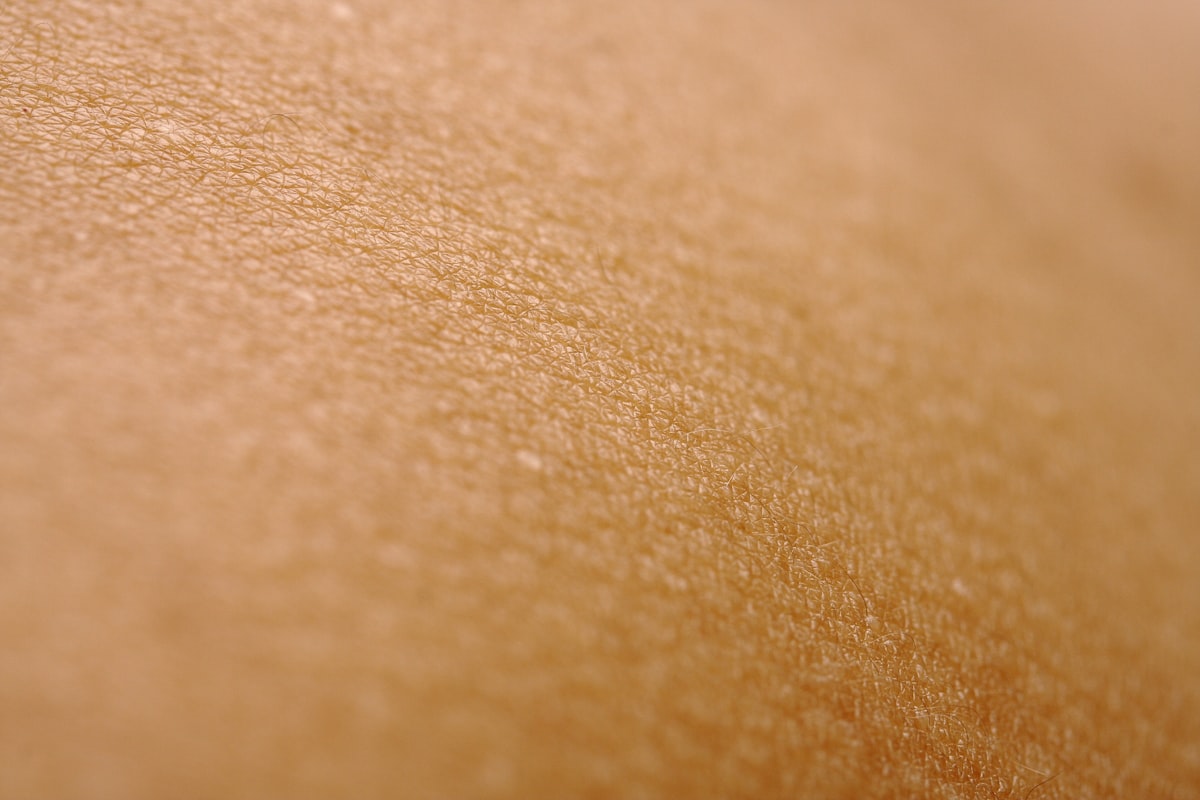
Textured Skin Is Not One Problem: Five Causes, Sorted by Touch
Search for how to fix textured skin and you will get the same three-part answer everywhere: exfoliate, add a retinoid, moisturize. It is not wrong so much as it is answering a question nobody asked, because textured skin is not a condition. It is a description of how your skin feels, and the uneven skin texture causes behind that feeling number at least five.
Two of them will not respond to that routine at all. One of them gets worse under it. So the useful first step is working out which of the five you are touching.
What is textured skin?
It is a description rather than a diagnosis, and the word does not name a condition. It names how a surface feels: rough rather than smooth, uneven rather than level, bumpy rather than flat.
The direction of the surface is what separates one felt pattern from another, and a fingertip catches it in seconds. Separate raised bumps are one kind. An even roughness spread across a patch is another. A surface that dips below the surrounding skin, with an edge you can feel, is a third thing that is not texture at all. The table below sorts all five rows that way.
If you met the term in a search rather than in a clinic, that is because it is a search term rather than a medical one. The diagnosis, when there is one, belongs to whichever of the five rows is producing the surface you are feeling.
Whether everyone has some of it is not the useful version of the question. Every surface has a grain, so what the table below sorts is not whether texture exists but which pattern yours matches, and whether it changed. That takes thirty seconds.
Textured skin: sort it by touch first
Wash your hands, and run a fingertip slowly across the area with your eyes closed. You are answering three questions: is the roughness spread evenly or made of separate bumps, are the bumps raised or sunken, and does the surface flake when you rub it.
| What it feels like | Most likely | Does exfoliating help? |
|---|---|---|
| Separate soft bumps, no opening, skin-colored | Closed comedones | Yes, but a retinoid does more |
| Separate hard white bumps, often near the eyes | Milia | No |
| Even sandpaper across a whole patch, in clusters | Keratosis pilaris | Gently, and moisturizer matters more |
| Sunken rather than raised, with a defined edge | Scarring, not texture | No |
| Flaking, tight, rough all over | Dryness or a stressed barrier | No, this is often the cause |
The rest of this page is what each row means and where to go next.
Separate bumps you can count
If you can point at individual bumps on otherwise smooth skin, the texture is a collection of lesions rather than a surface quality.
A bumpy skin texture on the face made of countable lumps usually starts here. Soft, skin-colored, no visible opening is the profile of closed comedones. These are early acne. StatPearls describes them forming when keratin and sebum block the pilosebaceous orifice beneath the skin surface, which is why they have no head and never come out under pressure. The full plan, including why it takes months rather than weeks, is in closed comedones.
Hard, white, mostly around the eyes points to milia, which behave nothing like a clog. They are keratin cysts under intact skin, and no amount of exfoliating brings them to a surface they were never connected to. See milia under the eyes.
If you are not certain which of several look-alikes you have, the four-way comparison sorts them by feel.
Even roughness across a patch
A rough skin texture on the face that spreads evenly, rather than sitting in separate lumps, usually means keratosis pilaris.
The American Academy of Dermatology describes it as a common skin condition, which appears as tiny bumps on the skin, adding that people commonly mistake the bumps for small pimples. What you are feeling is not a surface layer that needs sanding off. The AAD is specific about what the bumps are: these rough-feeling bumps are actually plugs of dead skin cells sitting in the follicles.
That distinction changes the treatment. Scrubbing works on the surface between the plugs, irritating skin without reaching the thing causing the texture. Moisture does more than most people expect, because the AAD notes that dry skin can make these bumps more noticeable. It is also seasonal in a way that catches people out, since many people say the bumps clear during the summer only to return in the winter.
Check your upper arms and thighs. Keratosis pilaris rarely visits the face alone.
Sunken rather than raised: this is scarring
This row matters most, because it is the one where products get sold against a problem they cannot touch.
Run your finger over the area again. If parts of it are below the surrounding surface rather than above it, and if those depressions have defined edges, you are feeling scar tissue rather than texture.
StatPearls describes what acne leaves behind: it can leave various scars after healing, which may present as depressed scars or hypertrophic and keloidal scars, and it names the depressed types precisely: depressed scars are either oval craters (boxcar scars), deep pits (ice-pick scars), or pits with sloped sides (rolling scars).
These are structural changes in the dermis. No serum, acid, or retinoid rebuilds lost tissue. What does address them is procedural, done by a dermatologist, and chosen according to which of the three shapes you have. Any product marketed as clearing "acne scars" is either describing marks that are flat and colored rather than sunken, or it is overselling.
The distinction between a flat brown or red mark and a genuine depression is the one to get right before spending anything, since it decides which side of what skincare can and cannot fix you are on, because flat marks do respond to topical treatment and scars do not. Dark spots after acne covers the flat ones, including why brightening products fail on some of them.
One thing worth knowing about how they form. StatPearls notes that when large acne lesions are subjected to trauma, they can develop fibrosis and scarring as part of the healing process. Squeezing is trauma. Every page on this site that tells you not to squeeze is pointing at this sentence, and there is a documented pattern where mild acne, including comedones, that are obsessively picked and excoriated leads to scarring that the acne itself would not have caused.
Scarring is also not rare in a way that lets you dismiss the risk: StatPearls reports that approximately 20% of the affected individuals develop severe acne, which results in scarring.
Rough all over, with flaking
If the whole area feels rough and tight and shows flaking rather than distinct bumps, the texture may be dryness or a compromised barrier rather than anything structural. Flaking on skin that is also visibly greasy is a separate case with its own map, covered in oily but flaky skin.
This one deserves its own attention because it is frequently self-inflicted. Aggressive exfoliation produces exactly this presentation, and then the roughness gets read as a reason to exfoliate more. Buying by percentage encourages that loop, and the published safety conclusion behind those percentages has two conditions attached that the label leaves off, which glycolic acid percentage sets out. If your texture arrived after you started scrubbing, using acids more often, or adding a second active, the most useful experiment is subtraction for two weeks: gentle cleanser, moisturizer, sunscreen, nothing else.
Stinging is the signal that separates irritation from everything else on this page. Products that used to feel fine and now sting are telling you something specific, and it is not that you need a stronger routine. Damaged skin barrier covers what that means and why swapping products rarely fixes it.
Enlarged pores
Pores contribute to how uneven skin looks, though they behave differently from everything above: what changes is their appearance rather than their number. This is a large enough topic to deserve its own treatment, and the honest summary is that visible improvement is possible while the structures themselves are not something a product removes. Two separate questions branch off here: large pores on the nose covers the openings themselves, and sebaceous filaments versus blackheads covers what sits inside them.
How to fix textured skin, by row
First, identify which row you are in. That takes thirty seconds and decides everything after it.
If it is comedones: a topical retinoid, applied thinly across the whole area, judged at two to three months rather than two weeks. The closed comedones plan covers the schedule.
If it is milia: stop planning around products. Removal is a procedure.
If it is keratosis pilaris: gentle chemical exfoliation and consistent moisturizing, expecting improvement rather than elimination, and expecting it to be worse in winter.
If it is scarring: see a dermatologist to find out which type, because the procedure depends on the shape.
If it is dryness or irritation: subtract for two weeks before adding anything. This is the row where doing less is the treatment.
In every row: stop picking. It is the one behavior that converts a reversible texture problem into a permanent one.
When to see a dermatologist
If you feel depressions rather than bumps; if the texture came with redness, stinging, or flaking that has not settled after two weeks of a simplified routine; if bumps are painful or inflamed; or if a correctly used treatment has produced nothing in three months.
Depressions and flat marks need different answers, and when that distinction warrants a professional look is set out separately. Depth is the thing a photograph flattens, so this is a poor candidate for a screen-only answer; online dermatology versus in person sets out which complaints transfer and which need the room.
FAQ
What causes uneven skin texture? At least five separate things: closed comedones, milia, keratosis pilaris, acne scarring, and dryness or barrier irritation. They feel different under a fingertip, and they respond to entirely different treatments, which is why a single product recommendation for "texture" is close to meaningless.
What are textural irregularities on the skin? Another way of writing the same felt quality this page sorts: an uneven surface. It does not name a condition either, so the answer is the same table, which separates separate bumps, even roughness across a patch, flaking, and areas that are sunken rather than raised.
Does everyone have textured skin? Every surface has a grain, so the useful question is which pattern yours matches, not whether texture exists.
How do I fix textured skin? By finding out which of the five it is before buying anything. Two of them (milia, scarring) do not respond to topical exfoliation at all, and one of them (irritation) gets worse with it.
Textured skin vs acne scars, what is the difference? Direction. Texture from bumps sits above the surrounding skin; scars sit below it and have defined edges. Sunken and edged means scar tissue, which topical products do not rebuild.
Will exfoliating more often smooth my skin? Only in the rows where surface buildup is the issue, and it actively works against you in the dryness and irritation row. If your texture appeared after you increased exfoliation, that sequence is the answer.
How long does it take to improve skin texture? Depends entirely on the cause. Irritation settles in weeks once you stop the aggravation. Comedonal acne needs two to three months to assess. Keratosis pilaris is managed rather than cured. Scarring does not improve topically at all.
Can textured skin be permanent? Scarring is. The other four are not, though keratosis pilaris tends to recur and comedonal tendency is managed rather than eliminated. This is the reason the picking warning is repeated everywhere on this site: it moves things from the reversible list to the permanent one.
The three-step answer everyone gives works, on one of five targets. Applied to the wrong one it wastes months or makes things worse. Thirty seconds with a fingertip tells you which of the five you have, and knowing that is worth more than any product bought for textured skin in general.